
When campuses abruptly shifted operations during the COVID-19 pandemic, the objective was not to create exemplary online courses. The objective was continuity. Drawing on lessons learned during Hurricane Harvey, existing online-learning infrastructure, and established system partnerships, our team was able to rapidly develop and scale instructional continuity strategies that helped support not only our own institution, but partner institutions and hundreds of organizations looking for practical guidance during an unprecedented disruption.
The Difference Between Online Learning and Emergency Remote Instruction
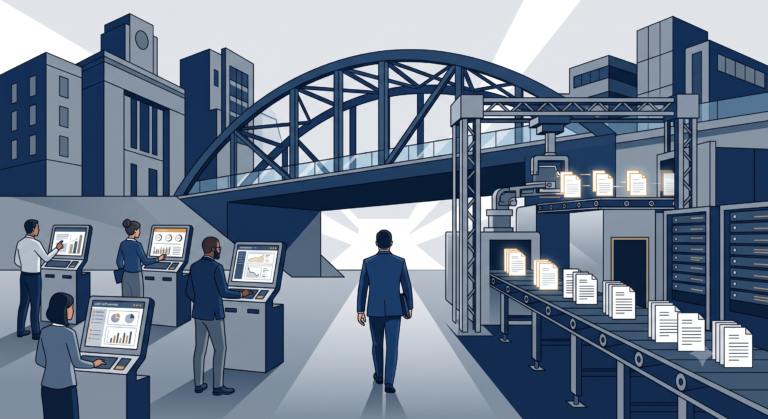
One of the most important lessons from March 2020 was that online learning and emergency remote instruction are not the same thing.
High-quality online learning is intentionally designed. It benefits from months of planning, instructional design, accessibility review, multimedia development, and faculty preparation. The result is a learning experience specifically built for an online environment.
What happened during the early days of COVID was fundamentally different.
Institutions across the country were forced to move thousands of courses online almost immediately. Faculty who had spent decades teaching successfully in face-to-face classrooms suddenly needed to deliver instruction remotely. Students were dispersed across the country and dealing with disruptions that ranged from limited internet access to family responsibilities, job loss, and health concerns.
Under those circumstances, the goal could not be perfection.
The goal was continuity.
The question facing academic leaders was not, “How do we create ideal online courses?”
It was, “How do we help teaching and learning continue next week?”
Harvey Was the Dress Rehearsal
For our team, the conversation actually began before COVID arrived in Texas.
In 2017, Hurricane Harvey had forced us to rethink how academic continuity could be maintained when large numbers of students suddenly found their normal lives disrupted. The circumstances were obviously different, but the underlying challenge was remarkably similar: how do you preserve academic momentum when normal operations become impossible?
I had an additional reason for paying close attention to the reports emerging from Asia and Europe in early 2020. After spending much of January recovering from pneumonia, I was acutely aware that whatever was developing overseas had the potential to become a significant problem if it spread widely.
As news reports became increasingly concerning, our team began revisiting continuity planning discussions and looking at how the lessons from Hurricane Harvey might apply to a very different type of disruption. We did not know exactly what was coming, but we knew waiting until the crisis fully arrived would put us behind.
By the time university leadership concluded that a major institutional response would be necessary, we had already developed a formal instructional continuity plan and were preparing recommendations for implementation.
Building Capacity Before It Is Needed
One advantage we had compared to many institutions was that we were not trying to build an online-learning support organization from scratch.
Years before the pandemic, Sam Houston State University had made significant investments in online education infrastructure. We had instructional designers, faculty-development processes, an established online help desk operation, and a large population of faculty members already experienced in teaching online. Further, our institution’s instructional support units already had some staff who had been supporting fully online students as a model for their entire units to shift to using to maintain services.
When the pandemic arrived, those resources became force multipliers.
Experienced online faculty served as mentors within their departments, helping colleagues navigate the basics of online instruction. Our instructional designers focused on continuity planning, training, and rapid support for faculty making the transition. Even staff whose normal responsibilities centered on classroom technology received accelerated training on core remote-instruction tools so they could become additional frontline support resources for those switching from slideshows in a lecture hall to recording lectures.
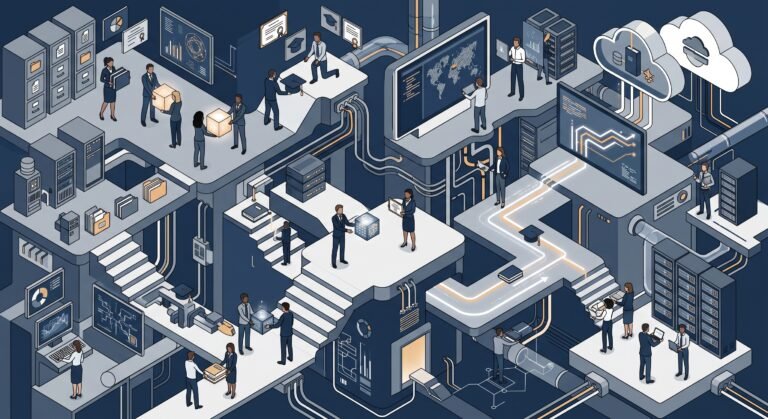
Rather than relying on a small specialist team, we were able to create a distributed support network – using the strengths of existing resources to their best advantage – that dramatically expanded our capacity.
That depth became one of the most valuable assets we had.
Building Lifeboats, Not Cruise Ships
As the scale of the disruption became clear, our team’s role changed dramatically.
Under normal circumstances, instructional designers are architects. We spend months helping faculty build robust, carefully planned learning experiences.
During the pandemic, we became first responders.
Faculty needed guidance they could implement immediately. Rather than encouraging complex redesigns, we focused on essential learning outcomes, straightforward communication strategies, flexible assessments, and tools that could be adopted with minimal training.
A well-organized document in the LMS was often more valuable than an elaborate multimedia experience that would take days to build. Asynchronous activities frequently provided more flexibility than requiring students to attend live sessions while navigating uncertain living circumstances, variable internet access, and rapidly changing schedules.
Under normal circumstances, we build cruise ships.
In the spring of 2020, we were building lifeboats.
Existing Partnerships Became Strategic Assets
The timing of several ongoing Texas State University System initiatives also proved unexpectedly valuable.
Lamar Institute of Technology (LIT) had already migrated into the shared Blackboard environment during the Fall 2019 semester, and we had increased staff to support them. Sul Ross State University was actively preparing for its own migration planned for Fall 2020, and we had been staffing to be ready for them.
When the pandemic struck, those existing relationships allowed us to expand support well beyond a single campus.
Our 24/7 help desk, which had already been expanded to support LIT, was already preparing to add front-line staff to handle the volume for Sul Ross for after the transition to the shared environment as the Fall term launched. We instead began providing support for Sul Ross on their own server starting in late March. Instructional design resources originally allocated for future migration and onboarding efforts shifted toward immediate continuity support. Faculty-development expertise and ideas on handling particular instructional problems were shared across institutional boundaries, and instructional designers began assisting Sul Ross faculty at scale months earlier than originally planned.
Infrastructure that had been built for collaboration suddenly became infrastructure for resilience.
When Leadership and Preparation Intersect
One lesson I took away from the experience is that preparation only matters if leadership is willing to act on it.
Like every institution in the country, university leadership was working with incomplete information and rapidly changing circumstances. Initial communications reflected the uncertainty everyone was experiencing.
Once it became clear that our team had already developed a more comprehensive continuity framework, leadership moved quickly to support and amplify those efforts. Faculty were directed to centralized instructional continuity resources, training materials, and implementation guides that allowed a coordinated institutional response to take shape with remarkable speed.
That alignment between preparation and executive support made an enormous difference.
Scaling Beyond Our Institution
One of the most surprising outcomes of the work was how far it traveled.
Because we focused on principles rather than products, the instructional continuity framework was useful far beyond our own institution. The guidance was not tied to Blackboard, Zoom, or any specific technology platform. It focused on communication, continuity, flexibility, and practical teaching strategies that could be applied almost anywhere.
Based on download records we maintained at the time, the continuity framework was downloaded by more than 300 organizations worldwide. For years afterward, versions of the guidance appeared on university websites across the country. In many cases, institutions adopted the framework verbatim, only adding on screenshots and technical tutorials to accompany it that were tailored to their own technology environments.
What began as an effort to help our own faculty maintain instruction unexpectedly became a resource for institutions facing many of the same challenges.
What the Experience Reinforced
The pandemic reinforced a lesson I first encountered during Hurricane Harvey:
Resilience is not built during a crisis.
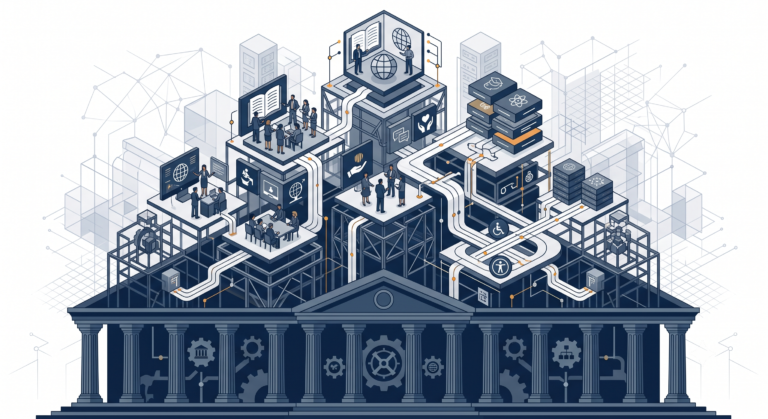
Resilience is built beforehand through investments in people, processes, partnerships, and infrastructure that may seem excessive until the moment they become essential.
The instructional continuity plans, online-learning support structures, faculty-development efforts, help desk services, and system partnerships that had been built over the preceding years were not designed specifically for a global pandemic.
They were designed to support online learning.
It just turned out they were exactly what we needed when the world changed.
Final Thoughts
Looking back, I am proud of what our team accomplished, but I am even more appreciative of what made those accomplishments possible. Years of investment in online learning, system partnerships, faculty support, and continuity planning provided a foundation that allowed us to respond far more effectively than would have been possible otherwise.
The workload was intense. From March through much of the summer, seventy-hour work weeks were common. It was not until mid-summer that things began to stabilize, and well into the fall before the pace resembled anything approaching normal.
But the results justified the effort.
Students continued making progress toward their degrees. Faculty successfully adapted their teaching practices under extraordinary circumstances. Institutional retention remained exceptionally strong despite the disruption.
Every institution will eventually face its own version of a crisis, whether it arrives as a pandemic, a natural disaster, a cyberattack, or something nobody has anticipated yet.
The specific disruption is impossible to predict.
The need for resilience is not.
Further Reading / Project Artifacts
During the spring of 2020, the frameworks and rapid-deployment strategies we developed were utilized to stabilize academic delivery across a massive network of educators.
- Web archive of SHSU’s Instructional Continuity efforts.
- Early reporting on institutional responses as universities began preparing for wide-scale disruption.
- Coverage of Texas institutions extending spring break and preparing for remote operations
- Texas State University System recognition of institutional efforts supporting students and continuity during the pandemic response.


One Comment
Comments are closed.