Most people assume major technology migrations succeed because of automation. One of the largest LMS migrations of my career succeeded for almost the opposite reason. After years of platform changes, unfinished transitions, and vendor-driven decisions, a fully automated solution simply wasn’t possible. We ultimately relied on cross-functional teams, disciplined processes, and a willingness to prioritize operational continuity over perfection.
Most Migrations Start Earlier Than You Think
People tend to think of a migration as the moment data moves from one system to another.
In reality, migrations often begin years earlier.
By the time SHSU Online – still called the DELTA Center (Distance Education and Learning Technology for Academics) – faced the challenge of moving from Pearson eCollege back to Blackboard, we were already carrying the baggage of multiple previous transitions. Some content had originated in a self-hosted Blackboard environment. Other courses had been built directly in eCollege. Many had been partially redesigned while moving from face-to-face or hybrid delivery into fully online formats.
At the same time, online enrollments were growing rapidly, new programs were launching, and course development demand was increasing every semester.
The result was that we weren’t migrating from a single, clean platform. We were migrating from several generations of decisions layered on top of each other.
That complexity would eventually become the real problem.
The Technical Debt We Inherited
One of the more frustrating realities of the eCollege environment was a feature known as “content management.”
At first glance, it sounded useful. In practice, it created long-term maintenance problems.
If a course item had originally been created by a faculty member who later left the university, future instructors often could not edit attached files directly. In many cases they couldn’t even replace a file in place. The content remained tied to the original creator.
The vendor’s solution?
There wasn’t one.
The only way to completely remove the restriction was to manually recreate the content item.
Not update it.
Rebuild it.
One item at a time.
In an entirely separate copy of the course stripped of all managed content.
Over a year and a half, our teams slowly worked through the highest-priority content. Just as we were making meaningful progress, we received news that Pearson was moving toward an entirely different platform.
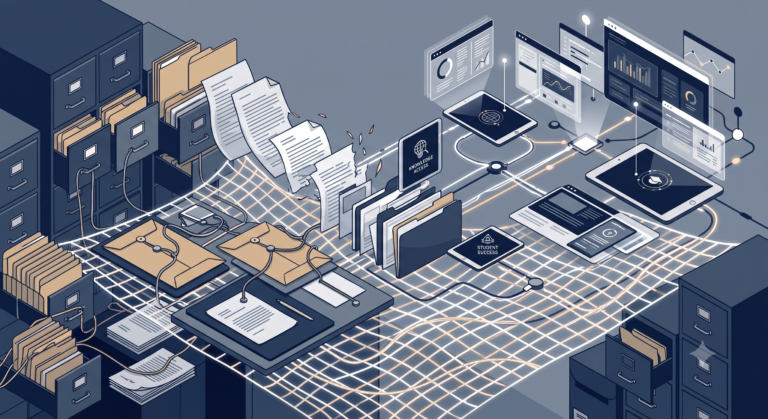
Unfortunately, there was a catch. There was no reliable export path.
The content would need to be manually recreated again.
That was the moment many of us collectively decided we were done with eCollege.
Sometimes Automation Isn’t the Answer
In an ideal world, migrations are highly automated.
You export content.
You import content.
You test.
You validate.
You move on.
This wasn’t that world.
We were not quite to “wailing and gnashing of teeth”, but it was not until the COVID-19 disruptions that we had so complex an operation to manage.
Fortunately, face-to-face courses still residing in the university’s self-hosted Blackboard environment were relatively straightforward. Blackboard simply copied those environments into the new cloud-hosted platform.
The eCollege content was a different story.
Because of the proprietary structures, content-management restrictions, and inconsistent course designs accumulated over the years, automation could only take us so far.
Eventually we reached an uncomfortable conclusion.
The fastest path wasn’t technical.
It was organizational.
We needed people.
Lots of them.
Building an Army
The university made the decision to complete the transition before the start of the Fall semester rather than operate a dual LMS environment through Spring.
Looking back, I still believe that was the correct decision for faculty and students.
It also meant we had roughly six weeks to move a massive amount of content.
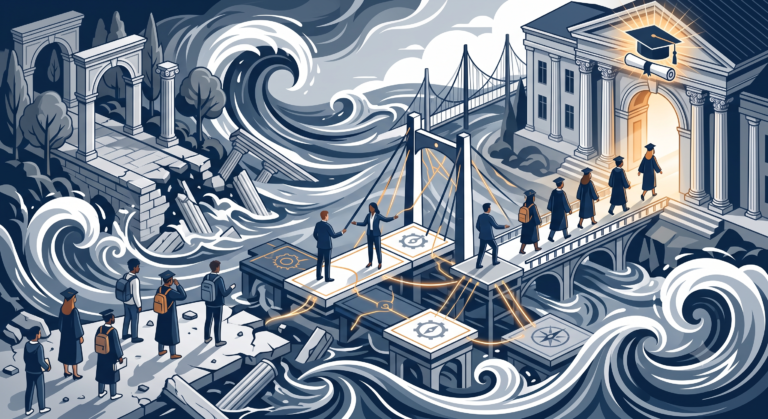
The migration effort was organized into four teams, each led by a senior institutional leader with the authority to make decisions when ambiguity emerged.
One team was led by our recently retired Associate Vice President.
Another by the Director of Correspondence and Continuing Education.
Another by the head of Video and Creative Services.
A fourth by the director managing faculty development.
Each team included instructional designers, support specialists, graphic designers, video producers, and content migration staff. I served as the instructional design and technical lead for one of those teams, helping troubleshoot issues, resolve design questions, and maintain consistency across migrated content. We even got help from a few technically competent folks from other departments on campus.
It wasn’t glamorous work.
Each team was put in a separate computer lab that was normally sitting unused during the summer. Most of the buildings those labs were in have since been demolished. Much of it was structured copy-and-paste activity performed at scale (and with mind-numbing repetition. A lot of it had clearly never been reviewed by anyone aside from the instructor and went on lists to follow up with later to try to improve.
But it worked.
The Unexpected Experts
One of my memories from the project involved a member of our graphic design team.
She was attempting to migrate an HTML-heavy content item and kept encountering errors when transferring it into Blackboard. Frustrated, she came to me looking for help.
After looking at the source code, I pointed out the specific HTML structures causing the issue and showed her how to isolate the individual content components so they could be reconstructed successfully in Blackboard.
What surprised her wasn’t the solution.
It was that somebody from the instructional design team could read the HTML and parse the errors well enough to identify and validate a solution within minutes. Not disbelief, but truly wanting to understand how I knew what the issue was.
That interaction reinforced something I have believed for years and would later build into the LETE curriculum:
Educational technology professionals do not need to become programmers.
But understanding enough of the underlying technology to diagnose problems can dramatically improve collaboration and productivity.
Faculty Reactions
Interestingly, faculty anxiety was far lower than many LMS migrations produce.
Most instructors had never fully abandoned Blackboard to begin with. For many, the migration felt more like a version change than a completely new platform.
In fact, a surprising number greeted the announcement with some variation of:
“Goodbye and good riddance.”
That reaction probably tells you everything you need to know about how popular eCollege had become.
The challenge wasn’t convincing faculty to leave the old system.
The challenge was giving them enough usable content and structure to successfully begin teaching in the new one.
Perfect Was the Enemy of Good
The biggest lesson from the project was not technical.
It was operational.
Had we insisted on a perfect migration, we would have failed.
There simply wasn’t enough time.
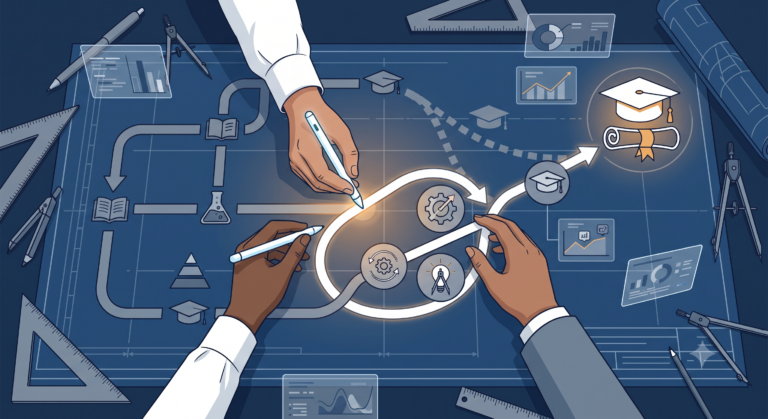
Instead, we focused on transferring enough content to provide a functional starting point while taking advantage of the improved tools available in Blackboard to rebuild and improve courses over time.
The goal was continuity.
Not perfection.
Looking back, that philosophy echoes several other projects I’ve discussed on this blog.
Whether responding to Hurricane Harvey, navigating COVID, or scaling online learning, success often depended on creating systems that could continue functioning under less-than-ideal circumstances.
What I Learned
Technology projects often receive attention for the software involved.
This project taught me that software is sometimes the least interesting part of the story.
The real challenge was years of accumulated technical debt, changing vendor priorities, organizational growth, and competing timelines. No automated migration tool could solve those problems.
People solved them.
The migration succeeded because cross-functional teams worked together, made practical decisions, and focused on maintaining continuity for faculty and students.
Perfection would have delayed us.
Progress got us to Fall.
Final Thoughts
Today, when people talk about LMS migrations, they often focus on platform features, cloud hosting, integrations, or analytics.
Those things matter.
But the lesson I carried forward from this experience is simpler:
Every migration is really a story about organizational decisions made years before the migration begins.
Sometimes the best solution is elegant automation.
Sometimes the best solution is a room full of smart people willing to roll up their sleeves and get the work done.
This was one of those times.
#LMSMigration #EducationalTechnology #ChangeManagement #Blackboard #FacultyDevelopment #ProjectManagement #TechnicalDebt #OnlineLearning #SystemsArchitecture #DigitalTransformation