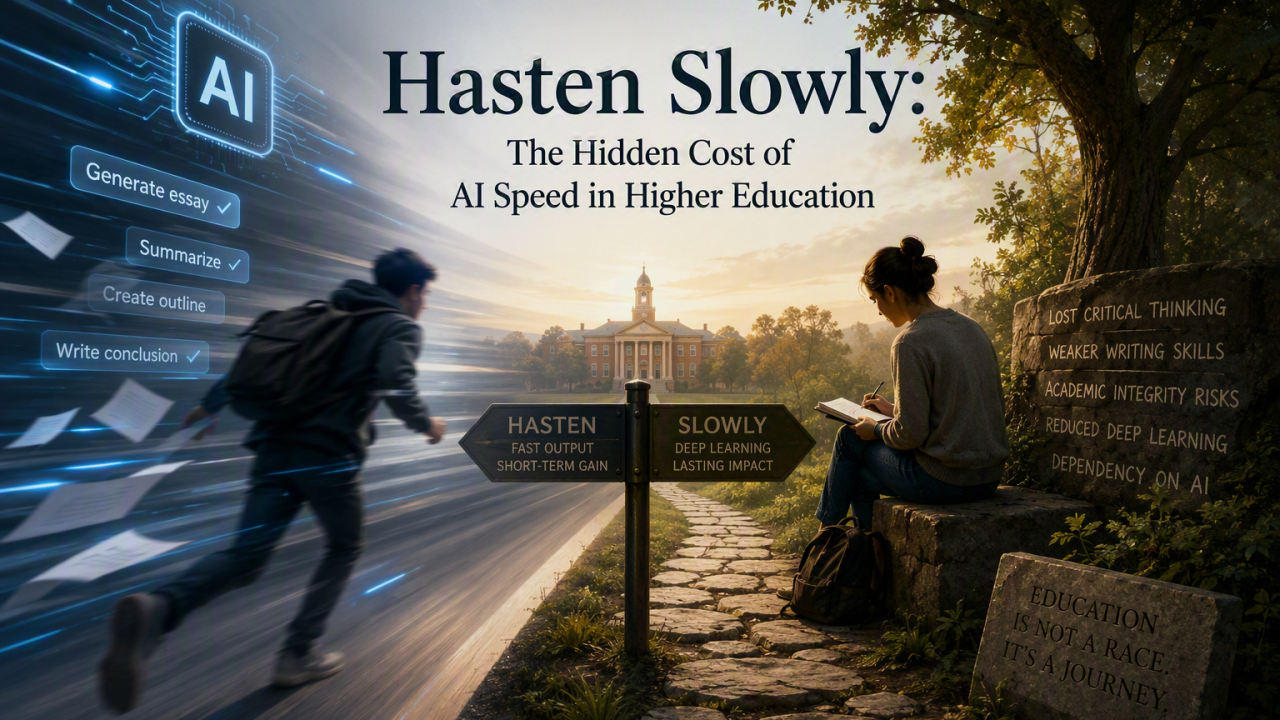
Before generative AI, discerning expertise often meant separating genuine knowledge from confident speculation. AI has not changed that requirement. It has simply made the confident speculation faster, cheaper, and infinitely more scalable.
AI doesn’t remove the need for expertise. It increases the value of expertise – and discernment – because someone still has to recognize when the AI is wrong.
From Dr. Alfonso Almeida a peer:
Key takeaway: “If a hallucinated citation looks exactly as confident as a real one, what happens to the person who was never trained to spot the difference? That is the question now facing higher education. Generative AI fabricates citations, legal facts, and scholarly claims at rates as high as 20 to 88 percent depending on the task, yet delivers every fabrication with the same fluent authority as the truth. A credentialed expert has the foundational knowledge to catch the error. Someone without that training does not, and increasingly, that gap is being filled by uncredentialed practitioners leaning on AI output they cannot independently verify, then legitimizing themselves with fast-tracked credentials that skip the very rigor that would have taught them to see the fabrication in the first place. This article traces that chain from hallucination to false expertise to counterfeit credentials and argues that only professionals with real, verified training can still tell the difference, which is exactly why that difference is worth defending.”
Read more:
Hasten Slowly: The Hidden Cost of AI Speed in Higher Education