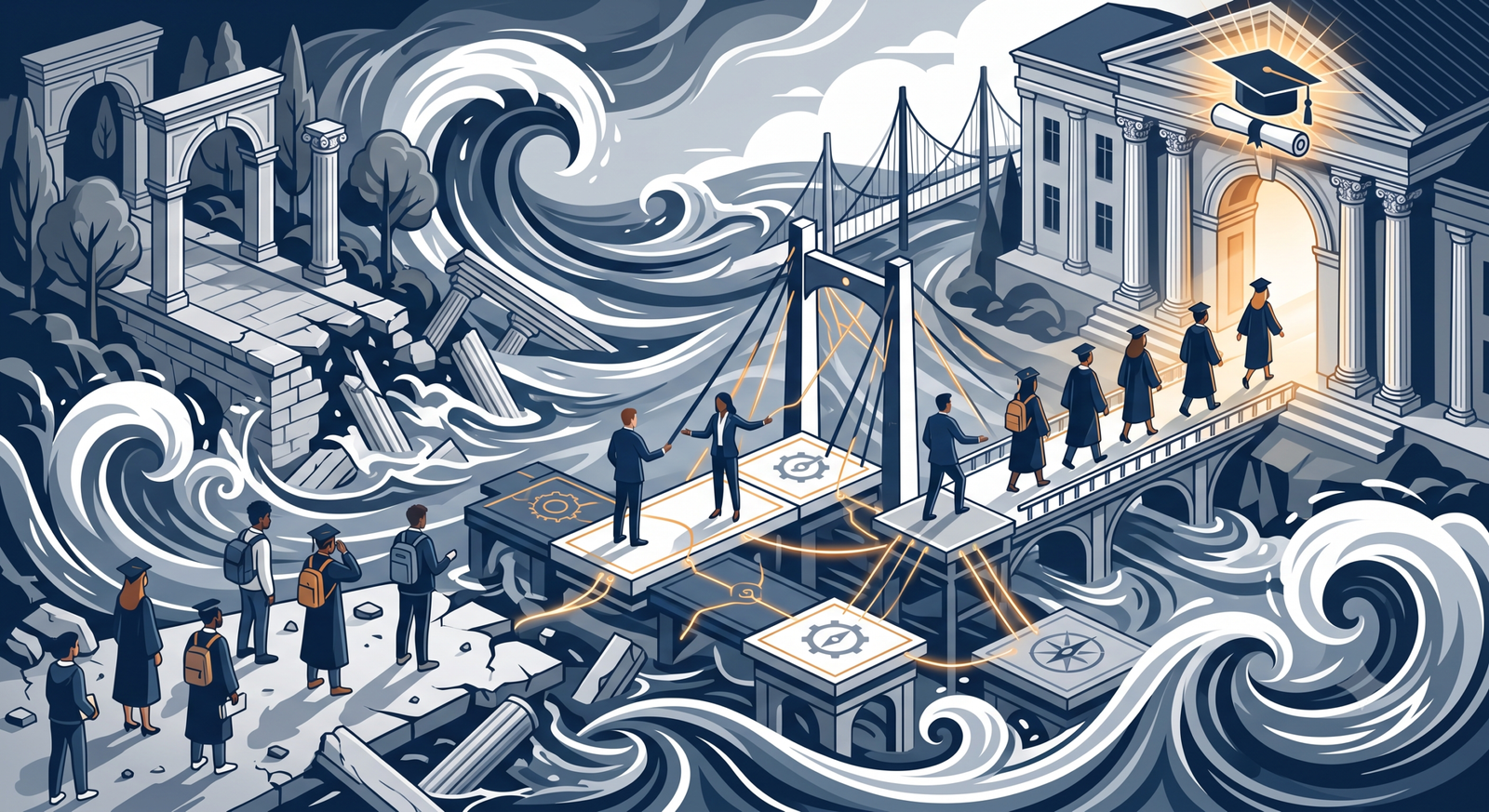
When Hurricane Harvey disrupted normal academic operations across Texas, simply moving courses online was not enough. By creating a delayed-start, compressed 10-week semester, we helped students continue making academic progress while recognizing that many were dealing with displacement, property loss, and significant personal disruption.
When Academic Operations Become Disaster Response
Most of the time, discussions about instructional design focus on improving learning experiences. During Hurricane Harvey, our focus shifted to a much more immediate question: how do we ensure students can continue their education when large portions of the state are dealing with a natural disaster?
As Harvey stalled over the Texas coast in 2017, students and faculty across the region faced circumstances that made a normal semester unrealistic. Some had evacuated. Some were displaced from their homes. Others were managing damage to property, disruptions to employment, or uncertainty about when life would return to something resembling normal.
The university faced a challenge that could not be solved simply by posting course materials online. Students who were struggling to find stable housing or reliable internet access were not in a position to immediately resume a traditional academic schedule.
The question became: how do we preserve academic progress without pretending circumstances are normal?
Building a Semester That Matched Reality
The solution ultimately involved creating a parallel, late-start 10-week online term for impacted students.
From the outside, that might sound like a simple calendar adjustment. In practice, it required substantial coordination across the institution.
A 15-week course cannot simply be compressed into 10 weeks by increasing the workload. Faculty had to identify essential learning outcomes and rethink course structures to make the condensed format achievable. Instructional designers worked alongside faculty members to redesign learning activities, assessments, and schedules under extremely compressed development timelines.
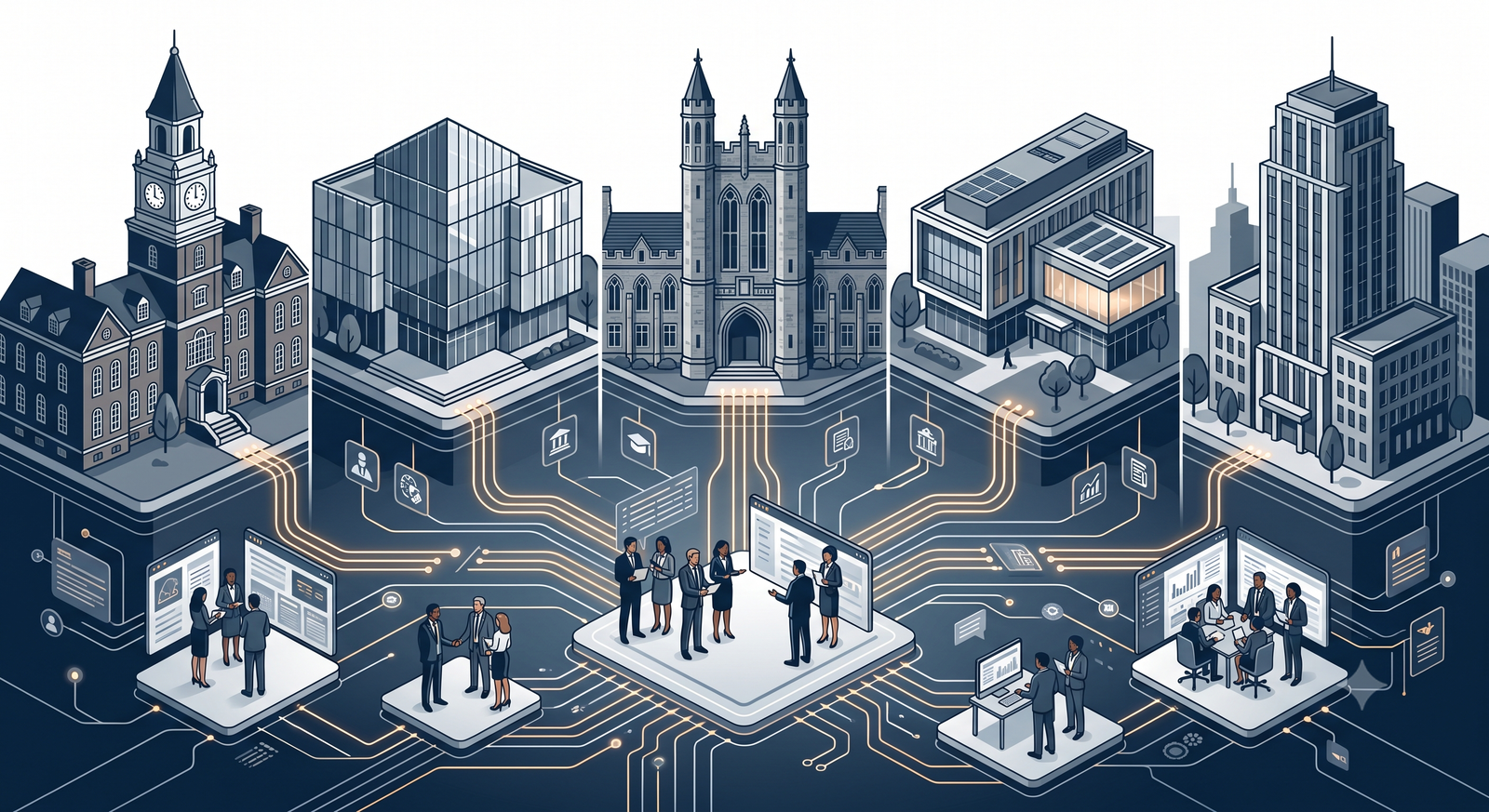
At the same time, the Registrar’s Office became an essential partner in making the plan operationally possible. Additional course sections had to be created, enrollment processes adjusted, and students reassigned into delayed-start offerings. Existing deadlines and procedures that normally govern semester operations sometimes had to be interpreted with a degree of flexibility to serve students whose situations did not fit neatly into established processes.
The objective was not simply to start classes later. The objective was to create a pathway that gave affected students a realistic opportunity to succeed.
Designing for Students Under Stress
One lesson that stood out throughout the process was the importance of reducing friction.
Under normal circumstances, a complex course structure may be manageable. During a crisis, every unnecessary hurdle becomes magnified.
Some students were completing coursework from temporary housing. Others were sharing devices with family members. Some had inconsistent internet access or schedules that changed daily as they responded to circumstances beyond their control.
As courses were redesigned, flexibility became one of the most important design criteria. Asynchronous delivery, streamlined navigation, and clear expectations helped ensure that the technology supported students rather than creating additional barriers.
The goal was not perfection.
The goal was continuation.
What the Experience Changed for Me
Harvey fundamentally altered how I think about academic systems.
It is easy to design processes around ideal conditions. Most institutions naturally build schedules, policies, and workflows around assumptions of stability and predictability.
The real test of a system, however, is what happens when those assumptions fail.
A course design that works only when students have uninterrupted access to technology, predictable schedules, and stable living conditions is a fragile design. The same principle applies to institutional processes, support structures, and technology platforms.
Resilience is not something you add after a crisis occurs. It has to be built into the system from the beginning.
Final Thoughts
Looking back, the most important accomplishment was not the creation of a compressed semester. It was the institution’s willingness to adapt established processes to serve students facing extraordinary circumstances.
Higher education often relies on fixed calendars, established procedures, and long planning cycles. Those structures are important, but moments of crisis remind us that flexibility is equally important.
Hurricane Harvey forced us to rethink how we delivered education under difficult conditions. A few years later, when the COVID-19 pandemic disrupted higher education on a global scale, many institutions found themselves confronting a similar challenge: how do you maintain academic continuity when normal operations are no longer possible?
The specific circumstances were different, but the underlying lesson was the same. Institutions that can adapt while maintaining their core mission are far more resilient than institutions that depend on everything going according to plan.
Further Reading / Project Artifacts
During the aftermath of Hurricane Harvey, Sam Houston State University rapidly deployed the 10-week late-start term to ensure displaced students could continue their education. The operational response and the deployment of this delayed strategy were later documented in peer-reviewed research:
- Chisum, R., Holzweiss, P. C., Walker, D. W., & Sosebee, T. (2020). Crisis Planning for Online Students: Lessons Learned from a Major Disaster. Online Learning Journal, 24(2). View in the Online Learning Journal.
- Key Context: The study notes that “campus leaders approved a strategy to delay online courses for several weeks” for students in the impact zone, effectively creating the ad-hoc semester.

One Comment
Comments are closed.