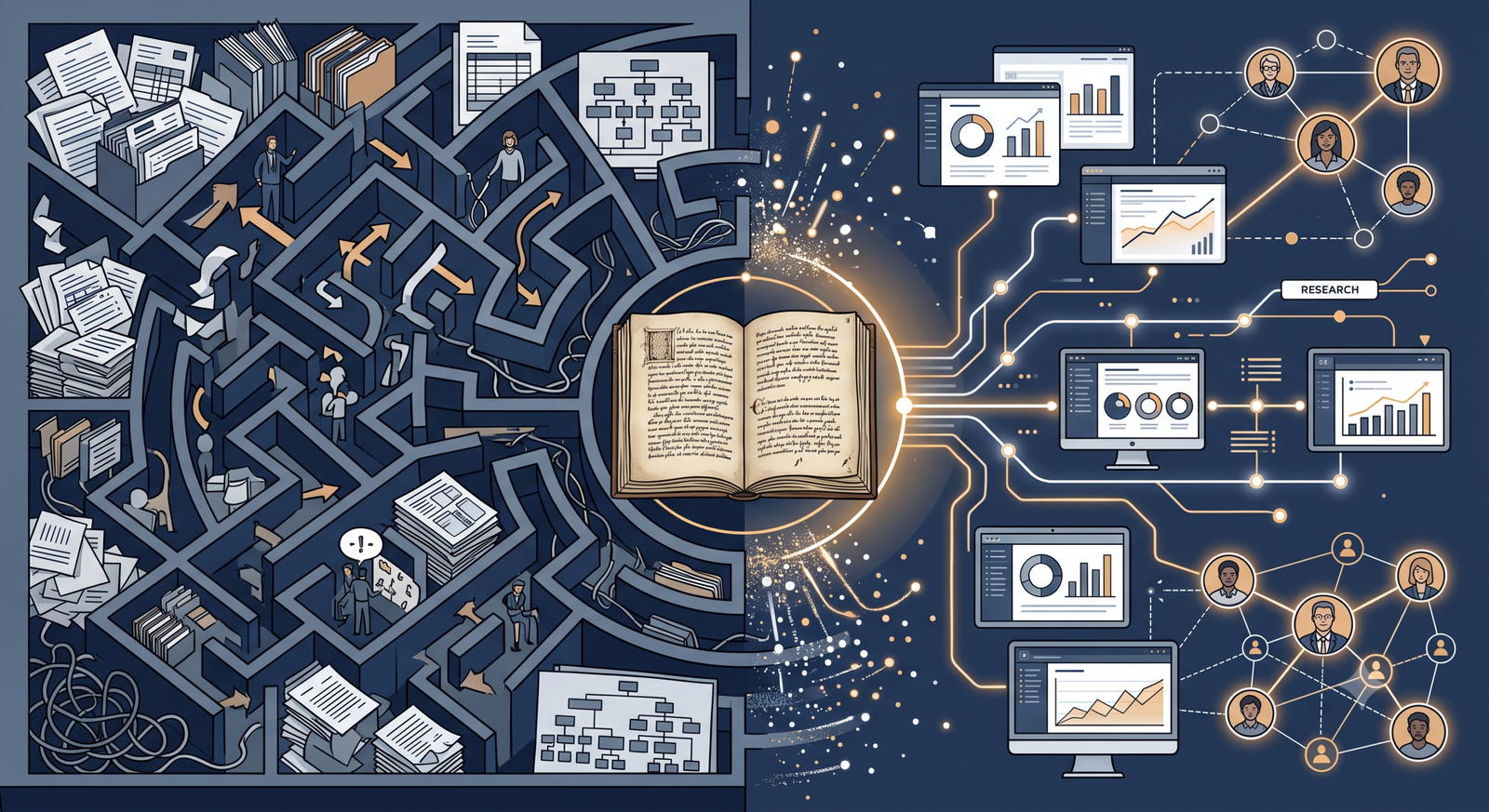
A faculty member approached me looking for a student staffing solution to manually transcribe a large portion (194 pages) of a 242-page nineteenth-century maritime diary. What they actually needed was a digital publishing workflow. By leveraging AI-assisted handwriting recognition, we bypassed hundreds of hours of manual transcription and transformed a historical artifact into a searchable research resource in a matter of weeks.
The Problem Behind the Problem
One of the most valuable lessons I’ve learned in educational technology consulting is that people often bring you a solution when what they really need is help defining the problem.
One of the most valuable lessons I’ve learned in educational technology consulting is that people often bring you a solution when what they really need is help defining the problem.
In this case, the opportunity only emerged because I happened to be on one of my periodic “walk-abouts” across campus. Over the years, I’ve made a habit of visiting departments, talking with faculty, and looking for challenges where technology, process improvement, or a fresh perspective might help that they might be reluctant to submit to a help desk primarily manned by student workers.
During one of those conversations, a faculty member in the Geography department stopped me to discuss a project he was trying to get off the ground.
He had secured grant funding to transcribe a large portion of a 242-page handwritten diary documenting a maritime expedition to Pitcairn Island between 1868 and 1872. The diary originated from a descendant of the Bounty mutineers and contained potentially significant historical information that had never been made broadly accessible to researchers.
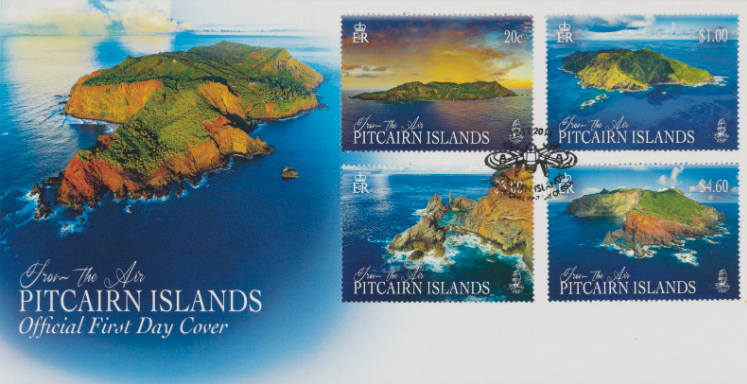
“Pitcairn from Air” stamp set was designed by Denise Durkin of Wellington, New Zealand, from photographs of Lionel Gouverner, French Polynesia. Image shows design chosen as an emblem for the Pitcairn Islands Research Station, Texas Digital Library.
The proposed plan centered on people and document management. The researcher envisioned assembling a team of student workers to manually transcribe the diary page by page, followed by multiple rounds of review and correction.
That meant recruitment, onboarding, scheduling, training, revision tracking, quality assurance, and the inevitable challenge of interpreting nineteenth-century handwriting.
The project appeared to be a staffing and document management challenge, and I was glad he thought to ask me for advice. In fact, he and I only crossed paths every few years. Had I not happened to stop by that day, it’s entirely possible the conversation never would have occurred. The project would likely have continued down the path of recruiting and managing student transcription workers because no one had challenged the underlying assumptions.
But after discussing the intended outcome, it became clear that staffing was merely one possible method.
The actual objective was much larger. The researcher wasn’t trying to create typed pages. He was trying to transform a unique historical artifact into a searchable, analyzable, and publishable resource for future scholarship.
Once that distinction became clear, the conversation changed entirely.
Reframing the Solution
Instead of designing a student-worker pipeline, we explored whether current AI handwriting recognition capabilities could handle the initial transcription work.
Using Claude’s vision capabilities, I developed a proof-of-concept workflow that processed the digitized microfiche images of the diary. Images were cropped and cleaned to remove scanning artifacts before being submitted for transcription.
The results were surprisingly effective.
Within weeks, the project had moved from an intimidating logistical challenge to a working corpus of searchable text.
The timeline was particularly striking. The transcription process progressed faster than the researcher could have recruited and hired a student workforce (which he would then have to train and organize). The cost of delivering a final product instead amounted to just a month of access to a premium AI service.
More importantly, the project’s human effort shifted dramatically.
Rather than spending hundreds of hours performing mechanical data entry and corrections, the researcher focused on validating outputs, correcting ambiguous passages, identifying historical figures and locations, and improving transcription quality through iterative feedback with the LLM.
The work became scholarly rather than clerical.
Changing the Role of Human Expertise
This is the aspect of AI adoption that interests me most.
The greatest value did not come from replacing human effort. It came from redirecting human expertise toward tasks that only humans could realistically perform.
The geographer’s knowledge remained essential. Historical context, interpretation, source validation, and identity verification all required subject-matter expertise. What disappeared was the need to spend months converting handwriting into digital text before any meaningful analysis could begin.
The technology compressed the distance between source material and scholarship.
One of the most rewarding aspects of the project was watching what happened after the workflow was established.
As the transcription effort progressed, I regularly received emails and phone calls sharing newly discovered connections, successful transcription runs, and the occasional breakthrough that only becomes possible once a historical source becomes searchable. The conversations became increasingly frequent as the project gained momentum. None of the historical insights came from the technology. They came from decades of subject-matter expertise, persistence, and a researcher who was willing to rethink his workflow in pursuit of a larger goal.
I followed the work as it developed from a transcription challenge into active scholarship, including conference presentations and ongoing historical research. In a somewhat ironic twist, I probably heard more from him during the final years of his career than I had during the previous decade. Part of that was simple excitement about the discoveries being made, but part of it was that there were relatively few people around him who both understood the historical value of the project and appreciated what the emerging AI tools were making possible.
For me, that became an important reminder that the success of a technology solution is not measured by the technology itself. The real measure is what people are able to accomplish once the obstacle is removed.
Lessons for Educational Technology Leaders
This project reinforced three principles that repeatedly surface in technology consulting:
- The First Request Is Rarely the Real Problem
People frequently describe the solution they have already imagined rather than the outcome they are trying to achieve. The initial request was for staffing assistance. The need was digital publication and research accessibility. - Workflow Innovation Often Matters More Than Technology
The success of this project was not simply the result of using AI. It came from redesigning the workflow around the desired outcome and removing unnecessary intermediaries. - Human Expertise Increases in Value When Routine Work Decreases
Automating repetitive tasks did not eliminate the need for scholarly expertise. It amplified its impact by allowing limited time and funding to be invested in interpretation, validation, and research.
Final Thoughts
Educational technology is often portrayed as a story about tools.
In practice, it is usually a story about reframing problems.
In this case, what began as a conversation about staffing evolved into a strategy for creating a searchable historical resource and accelerating scholarly discovery.
The technology mattered.
But recognizing the real problem mattered more.
Further Reading / Project Artifacts
The finalized, searchable transcription made possible by this workflow redesign was published by the Pitcairn Islands Research Station. You can view the academic publication and the project acknowledgements here:
- The full transcript cited in the article below
- Albert, D. P. (2026). Transcription of John Buffett’s Diary 1868-1872: New Resource from Pitcairn Islands Research Station. The Pitcairn Log, 53(2), 4-6. View in the SHSU Institutional Repository






One Comment
Comments are closed.