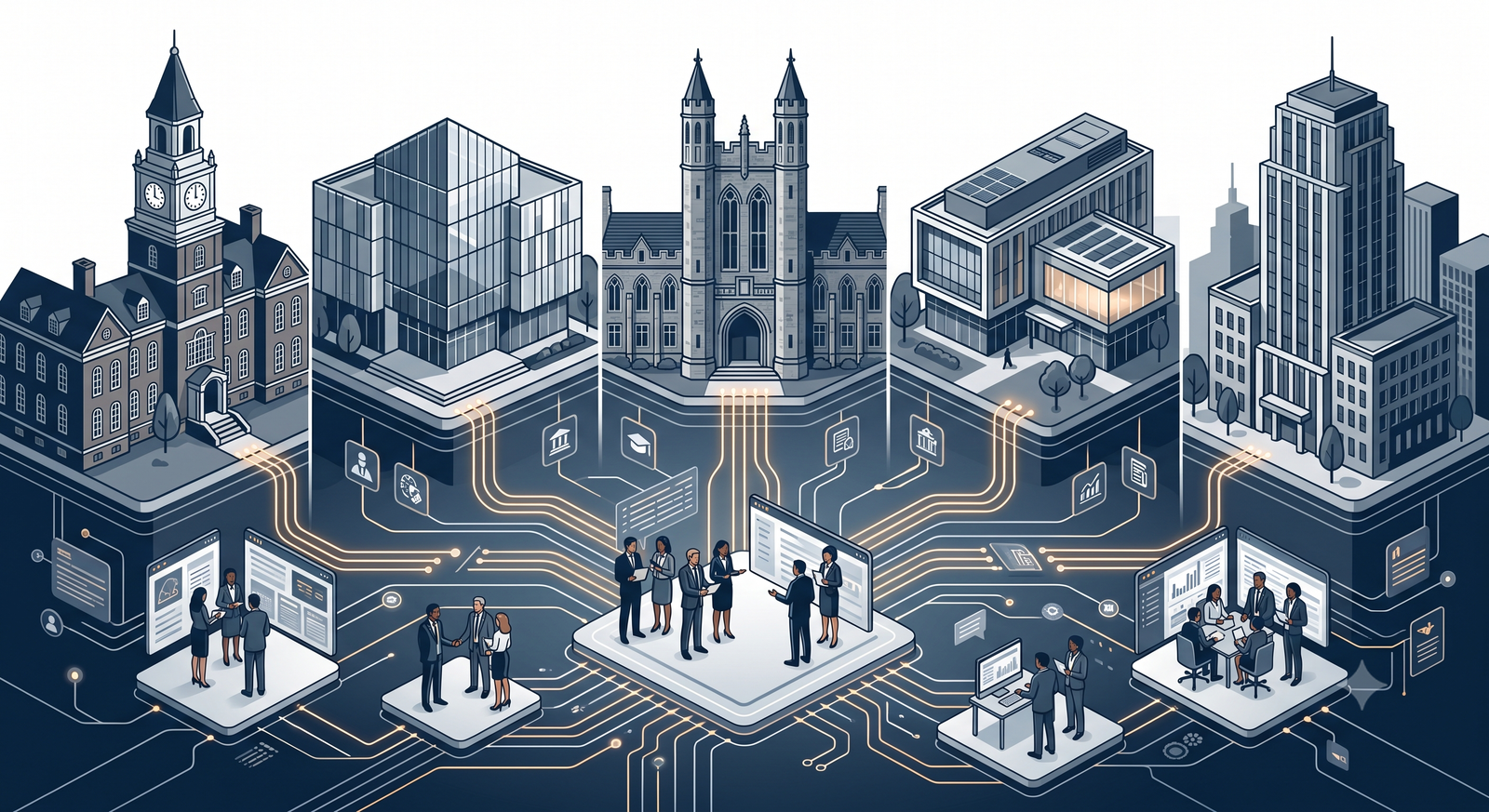
Traditional curriculum development assumes that subject-matter experts arrive first and course design follows. During the launch of Sam Houston State University’s Polytechnic College, we faced a different reality. Aggressive timelines required us to begin developing course architecture before all of the faculty had even been hired. By building curriculum frameworks first and content second, we were able to accelerate development without sacrificing academic quality.
The Problem with Sequential Processes
Most curriculum development follows a predictable pattern.
An institution identifies a need. Faculty are hired. Course content is developed. Instructional designers help package that content into a coherent learning experience.
It is a proven process, and under normal circumstances it works well.
The challenge is that every step depends on the completion of the previous step. When timelines become aggressive, a sequential process can quickly become a bottleneck.
That reality became especially apparent during the launch of the initial programs within Sam Houston State University’s Polytechnic College initiative.
The vision for the new programs was clear. Industry advisory boards had already helped identify workforce needs. Program goals had been established. Market demand had been validated.
What we did not yet have was a complete faculty roster.
The subject-matter experts who would ultimately teach the courses were still moving through the hiring and credentialing process. Some positions had not even been posted yet.
Waiting for every hire to be completed before beginning curriculum development would have placed the launch schedule at risk.
So we asked a different question.
What parts of curriculum development actually require a subject-matter expert, and what parts can be prepared in advance?
Separating Architecture from Expertise
The answer was surprisingly straightforward.
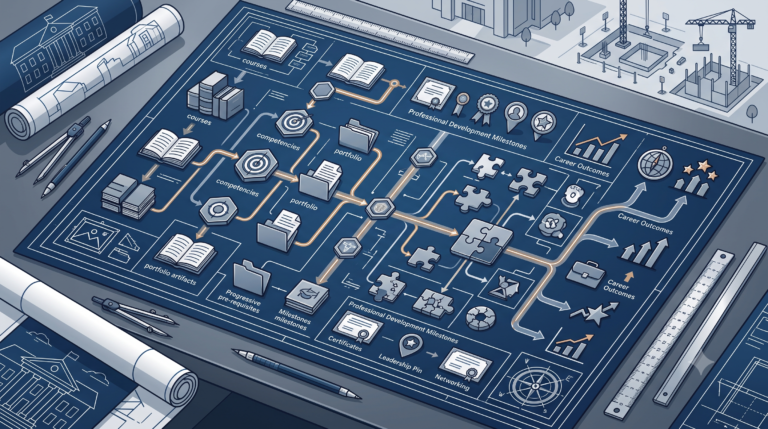
While subject-matter expertise is essential for developing course content, much of the structural work surrounding curriculum can begin earlier.
Course sequencing.
Module organization.
Learning objective frameworks.
Alignment matrices.
Assessment scaffolding.
Connections between workforce competencies and instructional outcomes.
These elements require thoughtful design, but they do not necessarily require the person who will ultimately teach the course.
Using approved program descriptions and workforce competency guidance from industry advisory boards, our team began building those foundational structures well before all faculty hiring had been completed.
The goal was not to create finished courses.
The goal was to eliminate the blank page.
Using AI as an Architectural Tool
This was one of the first projects where I found generative AI particularly useful as a curriculum-development tool.
Not as a content expert.
Not as an instructor.
Not as a replacement for faculty.
As an architectural assistant.
Using structured prompts and established workforce competencies, we generated draft learning objectives, possible module structures, course flow models, and initial mappings aligned to Bloom’s Taxonomy.
The outputs were not treated as finished products. They were working drafts intended to accelerate design discussions and provide starting points for later refinement.
In practical terms, AI helped us build empty shelves.
The books still had to be written.
Why Experts Prefer Editing to Creating
When faculty joined the project, something interesting happened.
Instead of handing them a blank document and asking them to design an entire course from scratch, we handed them a proposed framework.
We told them:
“Here’s our best attempt based on the workforce requirements and program goals. Tell us what’s wrong.”
Faculty immediately began improving the material.
Concepts were reorganized.
Learning objectives were rewritten.
Industry-specific standards were added.
Assessments became more authentic.
Examples became more relevant to actual professional practice.
Most importantly, the conversation started at a much higher level.
Instead of spending time debating how to structure a course, faculty could focus on applying their expertise to improve an existing structure.
The difference was significant.
Creating from nothing is difficult.
Improving something that already exists is often far easier.
Running Two Processes at Once
Looking back, the biggest advantage was not the AI.
The biggest advantage was that curriculum development and faculty hiring no longer had to occur one after the other.
Traditionally, one process waits for the other.
Instead, we allowed both processes to move forward simultaneously.
While hiring committees interviewed candidates and credentials moved through approval channels, curriculum architecture continued progressing in the background.
When the faculty arrived, they stepped into a development process that was already moving rather than one that had yet to begin.
That parallel approach ultimately saved months of potential development time.
What I Learned
This project reinforced a lesson that extends well beyond curriculum development.
Perfect information rarely arrives on schedule.
Organizations often assume they must wait until every piece is in place before beginning meaningful work. In reality, many projects contain components that can move forward independently if teams are willing to identify them.
The challenge is determining which decisions truly require complete information and which can be made provisionally while waiting on other parts of the process.
In this case, workforce competencies, program goals, and instructional architecture provided enough information to begin building. Subject-matter expertise remained essential, but it no longer represented a hard stop for progress.
Final Thoughts
The success of the Polytechnic College launch was not the result of replacing faculty expertise with technology.
In fact, the project demonstrated exactly the opposite.
The value came from ensuring that expert faculty spent their time doing work that actually required expertise.
AI helped build draft structures.
Instructional designers helped create alignment and scaffolding.
Hiring committees identified the right people.
Then the subject-matter experts arrived and did what only they could do: transform a framework into a curriculum.
The lesson was not that technology replaced expertise.
The lesson was that good architecture allows expertise to become productive much faster.
When launch dates are fixed and timelines are compressed, sometimes the most valuable thing you can give a new faculty member is not a blank page.
It’s a place to start.